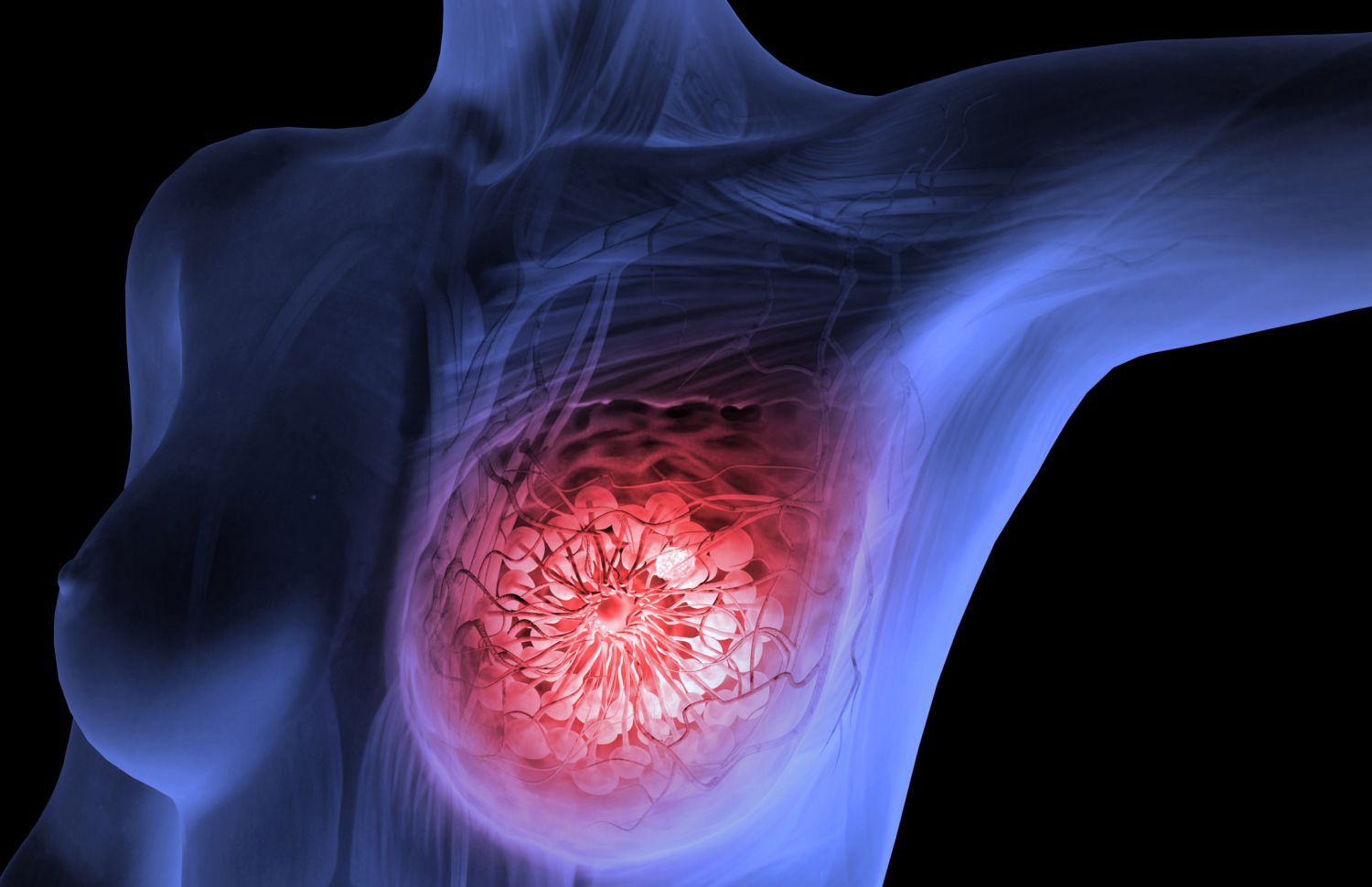
MRI approach presents medical doctors with extra reliable records about breast most cancers

Breast cancers are a leading cause of cancer death in girls. According to the World Health Organization, a few 627,000 women died from it in 2018, accounting for about 15 percent of all cancer deaths among girls. Early detection is essential to enhance breast cancer outcomes and survival. There has been great progress in recent years with various imaging techniques, such as mammography and MRI.
Supported by the aid of the EU-funded IDentIFY challenge, scientists have set their points of interest on further enhancing the analysis of most cancers and different sicknesses like osteoarthritis. According to the University of Aberdeen, a team from the University of Aberdeen has invited wholesome women from Aberdeen and Aberdeenshire to check out and calibrate a new scanner referred to as fast area-biking MRI (FFC-MRI), an information item. The group hopes the technology will result in an earlier diagnosis of breast cancer.

The identical information item notes that the system utilizes “a susceptible, switchable magnetic subject in conjunction with pulses of radio waves to generate data approximately diffused modifications in the body’s tissues. It could be particularly beneficial to look at how the appearance of breast tissues adjusts at some point in the menstrual cycle using the FFC-MRI scanner.
Volunteers needed
In the same piece, IDentIFY coordinator Prof. David Lurie says: “Participants will play a vital role in progressing this new technology by assisting us to understand more precisely the markers of healthy breast tissue. With the participation of healthy lady volunteers who undergo three separate breast scans during their menstrual cycle, the researchers will provide you with a clear information profile for regular breast tissue. This will make it simpler to locate the earliest symptoms of the ailment.
A step alternate in MRI
As a new diagnostic method, FFC-MRI isn’t like conventional MRI scanners. This is because the FFC-MRI scanner can alter its magnetic subject, giving an additional size to the information amassed from each affected person, uunlike conventional MRIs in which the applied magnetic discipline has to be consistent for the duration of picture acquisition. The IDentIFY task internet site explains:
By deliberately switching the magnetic field during the collection of MR photographs, we can access considerably new styles of endogenous contrast. This new assessment has proven strong in analyzing and tracking a wide variety of conditions.
The IDentIFY (Improving Diagnosis by using Fast Field-Cycling MRI) assignment turned into an installation with the general objective of improving the prevailing FFC-MRI generation to be used as a routine tool for clinical programs. Project companions consider their approach will generate new quantitative disorder biomarkers. This will assist in improving scientific analysis, treatment selections, and tracking.
The new technology can also be useful for manufacturers of scientific imaging systems and related digital gadgets. Choosing to have a career in the spotlight often blurs the lines between a person’s public and private persona. BBC2 current affairs broadcaster Victoria Derbyshire used her public persona to document a private
Personal experience – recovering from a mastectomy after being diagnosed. Breast cancer. In a video uploaded to YouTube, she held up two pieces of card; one was emblazoned with the words: “THIS MORNING I HAD BREAST CANCER,” and the other said: “THIS EVENING I DON’T!” The courageous decision to make the life-changing moment public touched medical professionals and cancer patients alike.